
AwardJune 2025
iVi by Lumirah Wins Best of Show at InfoComm 2025
iVi was awarded Best of Show at InfoComm 2025, recognised for its innovative beam-splitter technology that enables true eye contact in video communication.

Winner, Best of Show ·
AV Technology, InfoComm 2025
As seen at:





The latest from iVi and Lumirah, and the research behind why eye contact matters.
iVi was awarded Best of Show at InfoComm 2025, recognised for its innovative beam-splitter technology that enables true eye contact in video communication.
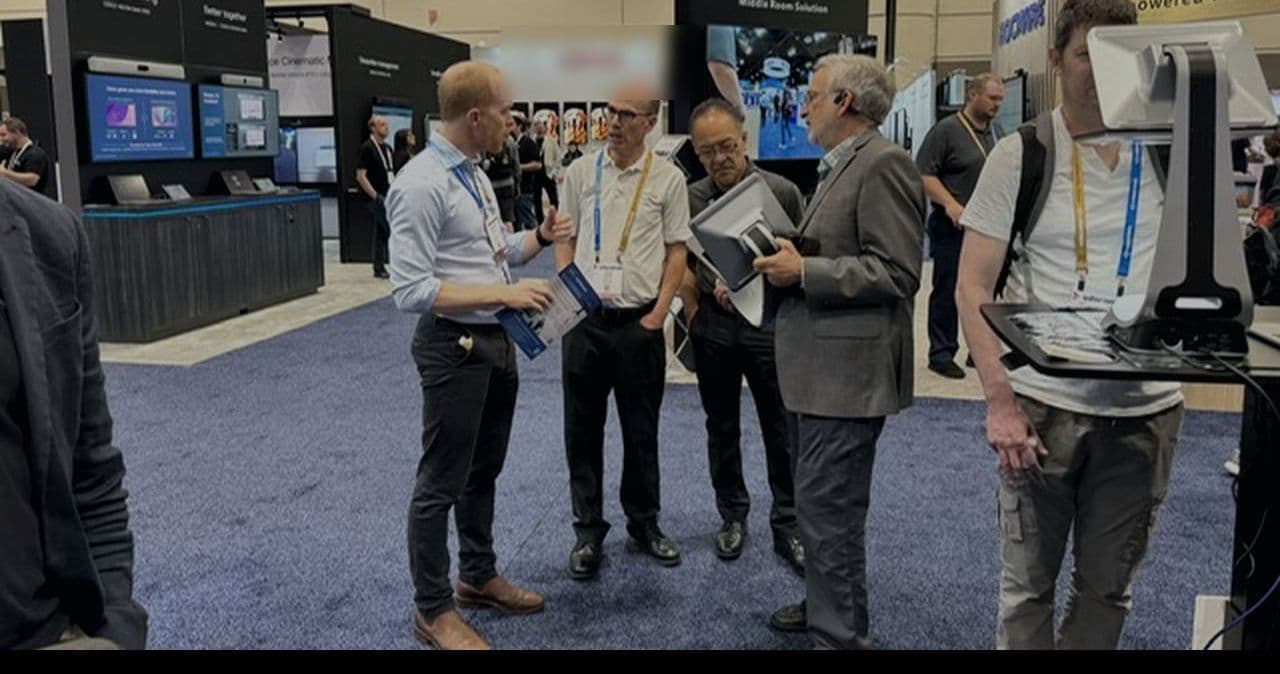
After a standout debut, iVi returned to InfoComm with an expanded booth, live demonstrations, and new partnerships with leading telehealth platforms.
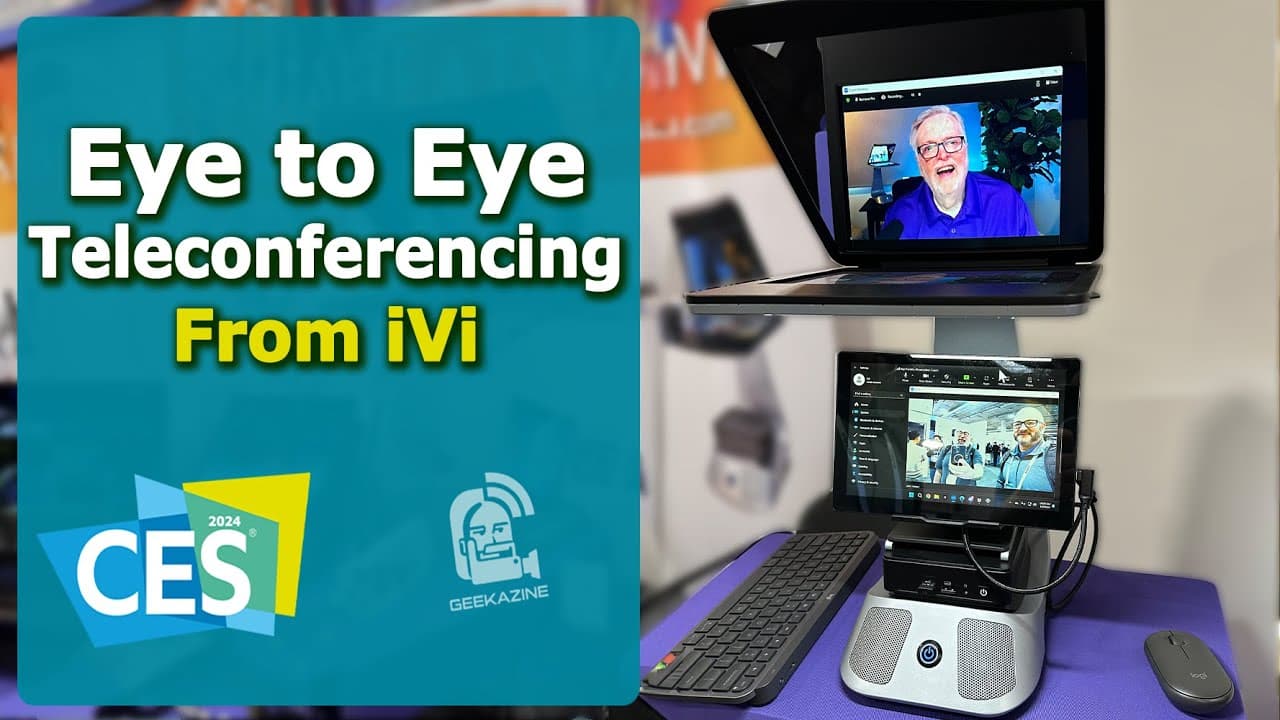
Before the awards and the anodised aluminium, there was a prototype in Las Vegas. The earliest iVi made its first public appearance at CES 2024, demonstrating eye-to-eye teleconferencing to the world for the first time. Geekazine caught the original reveal on camera.
Watch the reveal
In videotaped clinical encounters, researchers measured which nonverbal behaviours predicted how empathic patients judged their clinician to be. Eye contact came out on top: more clinician gaze meant higher perceived empathy and connectedness, independent of what was said. When patients decide whether you care, they look at where you're looking.
Montague, E., Chen, P., Xu, J., Chewning, B., & Barrett, B. (2013). Nonverbal interpersonal interactions in clinical encounters and patient perceptions of empathy. Journal of Participatory Medicine, 5, e33.
Read the paper
Neuroscientists Senju and Johnson show that direct gaze activates the brain's social network through a fast, dedicated pathway, and that newborns orient to eye contact from their first days of life. Eye contact isn't a social nicety we learn. It's a biological signal we're built to respond to.
Senju, A., & Johnson, M. H. (2009). The eye contact effect: Mechanisms and development. Trends in Cognitive Sciences, 13(3), 127–134.
Read the paper
Researchers at Toronto's University Health Network filmed clinicians at different camera angles and asked observers to judge the eye contact. At a 7-degree gaze angle, 87% perceived better eye contact than at 15 degrees, and 92% said the difference would matter to them as patients. The closer the camera sits to the eyes on screen, the more present the clinician feels. This is the problem iVi's optics eliminate entirely.
Tam, T., Cafazzo, J. A., Seto, E., Salenieks, M. E., & Rossos, P. G. (2007). Perception of eye contact in video teleconsultation. Journal of Telemedicine and Telecare, 13(1), 35–39.
Read the paper
In the most cited review ever written on the subject, psychologist Chris Kleinke maps forty years of research into a simple conclusion: gaze is how humans signal attention, build intimacy, establish credibility, and persuade. People who make more eye contact are consistently rated more likeable, more competent, and more trustworthy.
Kleinke, C. L. (1986). Gaze and eye contact: A research review. Psychological Bulletin, 100(1), 78–100.
Read the paperFollow our journey as we bring true eye contact to everyone who connects on video.